A foreman should not have to spend Friday afternoon chasing down crumpled timecards from three different jobsites. But for a lot of subcontractors, that is still the routine. When you compare field time tracking vs punch cards, the real issue is not just how hours get recorded. It is whether your crew time is helping you run jobs better or creating one more weekly mess for the office.
For small and mid-sized subcontractors, labor is where jobs are won or lost. If hours are late, wrong, or hard to match to the right cost code, your payroll slows down, your job costing gets fuzzy, and your profit picture starts to drift. That is why this choice matters more than it used to.
Field time tracking vs punch cards: what actually changes?
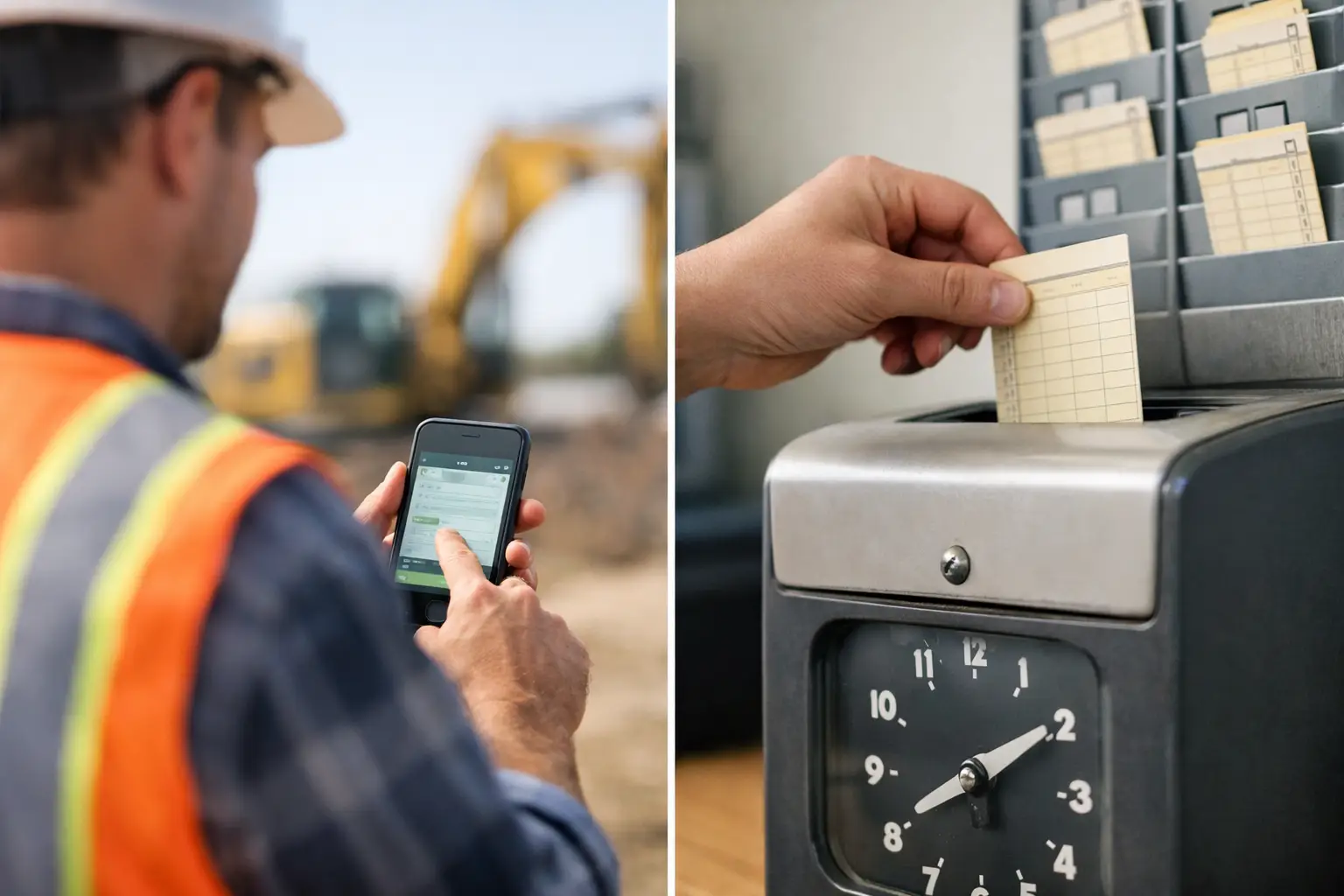
Punch cards were built for a different kind of workday. One location, one clock, one shift, one supervisor. That setup can still work in a warehouse or shop. It starts breaking down fast when your crews are spread across multiple jobs, moving between tasks, or starting the day in the field instead of the yard.
Field time tracking fits how subcontractors actually operate. A crew leader or employee logs time from a phone or tablet, usually tied to a specific job, task, or phase of work. Instead of collecting paper and re-entering it later, the office sees labor data as it comes in.
That does not mean punch cards are always useless. If you have one fixed facility and a very small team with predictable hours, they can be cheap and familiar. But once your business depends on mobile crews, daily job changes, and tighter reporting, paper-based systems start costing more than they save.
Why punch cards create problems in the field
The biggest problem with punch cards is not the card itself. It is everything around it.
Someone has to hand them out, collect them, review them, fix missing entries, and enter the hours into payroll or accounting. If a worker forgets a card, writes the wrong job name, or hands in a card two days late, the office has to sort it out. That might sound manageable with five employees. It gets expensive with twenty, fifty, or more.
There is also the issue of visibility. Punch cards tell you what happened after the fact, if they are filled out correctly. They do not give owners or office staff a live view of who is on site, how many hours a crew has logged today, or whether labor is tracking against the estimate.
Then there is the accuracy problem. Handwritten timecards leave room for rounding, guesswork, and honest mistakes. In some cases, they also leave room for buddy punching or inflated hours. Most subcontractors are not dealing with fraud every day, but nearly all of them are dealing with preventable payroll corrections.
Where field time tracking makes a real difference
Field time tracking gives subcontractors faster, cleaner information. That matters because labor touches almost every part of the business.
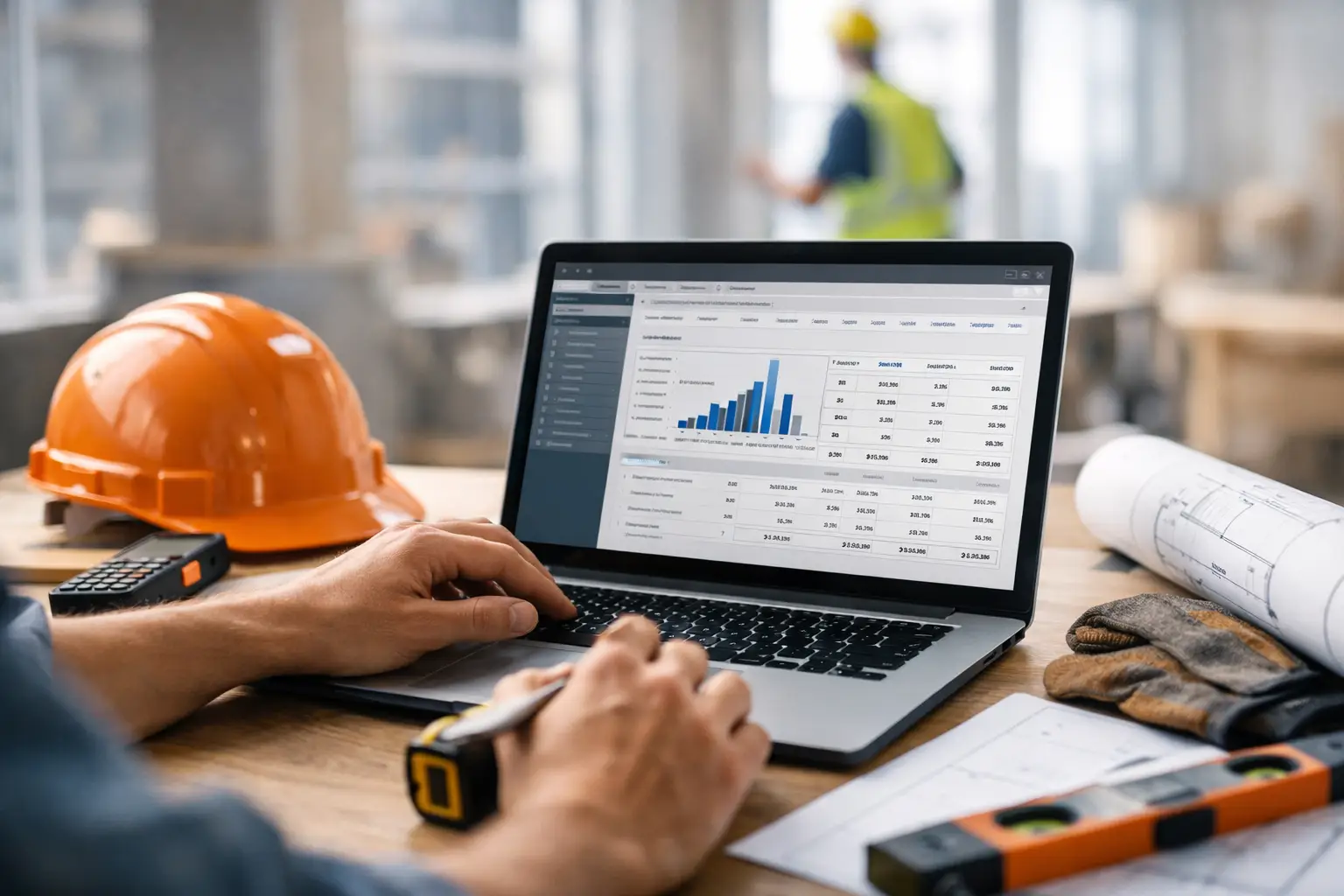
When time is entered directly from the jobsite, payroll becomes easier to process. Hours are attached to the right employee and the right job before they reach the office. Foremen can review entries sooner. Admins spend less time decoding handwriting or tracking people down. Owners get a clearer picture of labor costs while the work is still in progress, not after payroll is already closed.
This also improves job costing. If your concrete crew spends extra hours forming on one project and fewer on another, you want that detail now, not next week. Better time data helps you spot production issues, labor overruns, and estimating gaps earlier.
For many subcontractors, the hidden benefit is accountability. Crews know their time is being recorded consistently. Foremen know the office can see job activity in real time. That usually tightens up habits without turning the process into a headache.
The trade-offs are real
There is no point pretending digital tools fix everything overnight. Field time tracking is better for most subcontractors, but only if the system is simple enough for the field to actually use.
If software is cluttered, slow, or built more for a general contractor than a trade crew, adoption falls apart fast. Workers skip entries. Foremen make notes on paper and plan to enter them later. The office ends up with a hybrid process that is just as messy as the old one.
That is why ease of use matters as much as features. A good field time system should let crews clock in quickly, switch jobs or tasks without confusion, and keep the process moving. If it takes training sessions and workarounds just to record labor, the tool is part of the problem.
There is also a change-management piece. Some long-time employees may trust punch cards because they have always used them. That resistance is normal. The fix is not a complicated rollout. It is using a system that feels straightforward from day one and shows immediate value to both the field and the office.
Field time tracking vs punch cards for payroll and job costing
This is where the gap gets wider.
With punch cards, payroll often starts with manual data entry. Even if your office is careful, every re-entry step creates another chance for mistakes. You are also burning paid admin time on work that adds no value.
With field time tracking, payroll can move faster because time is already organized by employee, date, and job. If your system also connects with your accounting process, the handoff is even cleaner. That can mean fewer corrections, fewer calls to supervisors, and less end-of-week scrambling.
Job costing improves too. Punch cards tend to give broad labor totals. Field time tracking can give labor by job, task, phase, or crew. That level of detail helps you answer practical questions: Which job is eating hours? Which crew is running efficiently? Where did the estimate miss? Those answers help you price future work better and protect margin on current work.
For subcontractors running multiple jobs at once, this is not a small improvement. It changes how quickly you can make decisions.
What subcontractors should look for in a field-ready system
Not every digital time tool is a fit for construction, and not every construction platform is built for subcontractors. If your crews are working across active jobsites, the system needs to match that reality.
Start with mobility. Employees and foremen should be able to enter time in the field without jumping through steps that slow them down. The interface should be clear enough that a crew can use it with little to no training.
Next is job-level visibility. It should be easy to assign labor to the right project and task so the office can trust the numbers. If you are still cleaning up job names or fixing coding errors after the fact, the process is not solved.
You also want real-time access. Office staff, project managers, and owners should not have to wait for paper to show up before they know what happened. A good system gives you current labor information while you can still act on it.
And just as important, it should not come with enterprise-level baggage. Most subcontractors do not need bloated software loaded with tools they will never use. They need something simple to learn, built for real jobsites, and practical enough to help on day one.
That is where platforms like SimplySub stand out. Instead of forcing subs into software designed around general contractor workflows, it gives crews and offices one straightforward place to handle time, jobs, and field-to-office workflows without extra complexity.
When punch cards still make sense
There are a few cases where punch cards can still be workable.
If your entire team reports to one yard every day, performs repetitive work in one location, and you are not trying to track labor by job phase, a basic punch system may be enough. The same goes for very small operations that have not yet felt pain from payroll errors or job-cost blind spots.
But even then, the limits show up eventually. As soon as you add more crews, more jobs, or more demand for real-time visibility, the old process starts dragging the business down. What felt simple at ten employees can become a weekly bottleneck at twenty.
The better question is not paper or digital
The better question is whether your time system helps you control labor or just document it after the fact.
Punch cards mostly help you record attendance. Field time tracking helps you run the business. It gives you cleaner payroll, stronger job costing, faster oversight, and fewer gaps between the field and the office. For subcontractors trying to stay organized and profitable across multiple jobs, that difference adds up fast.
If your current process depends on chasing cards, fixing hours, and waiting until the week is over to see labor costs, you already know where the friction is. The right system should take that friction out of the day, not add another layer to it.
Good time tracking should feel simple in the field and useful in the office. If it does both, your crews spend less time proving what happened and more time moving the job forward—especially if you’re pairing clean hours with reporting and exports and a daily job record through daily work logs.
If you are already at the point of replacing paper, it helps to see what that transition looks like in practice (like in how to replace paper timecards fast or how to track crew hours). And when you are ready to evaluate tools seriously, compare pricing and book a demo.