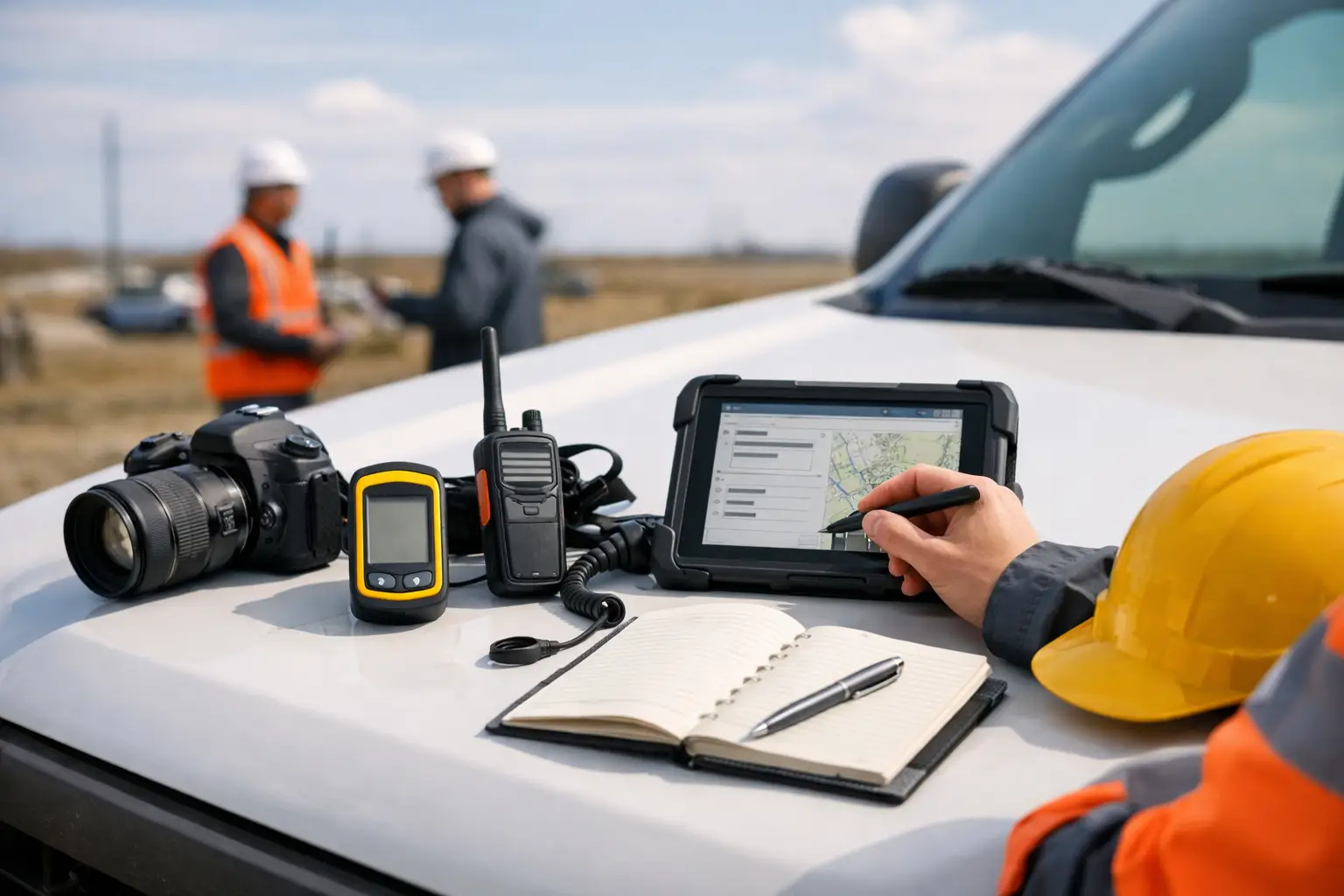
One crew is waiting on material, another needs a layout check, and the office wants updated hours before payroll closes. That is the real answer to how foremen manage multiple jobsites - not by working harder, but by controlling the flow of people, information, and decisions before small problems turn into lost time.
For most subcontractors, running more than one site at a time is where growth starts to feel messy. What worked when a foreman stayed on one project all day breaks down when that same person is bouncing between three concrete pours, two punch lists, and a service call. The issue usually is not effort. It is visibility. If the foreman cannot see labor, materials, equipment, progress, and issues in one place, every job starts competing for attention.
How foremen manage multiple jobsites without losing control
The best foremen do not try to personally solve every field problem as it happens. They build a repeatable system. That system gives crews clear direction in the morning, makes status updates easy during the day, and gives the office a clean view of what actually happened.
This matters because multiple jobsites create a chain reaction. A late delivery on one site can pull a worker, a truck, or a piece of equipment off another site. A missing photo can hold up billing. An incomplete daily log can turn a simple delay into an argument a week later. Good foremen know that coordination is the job.
In practical terms, that means they focus on a few things every day: labor placement, production priorities, communication, documentation, and fast adjustments. They also know where they can improvise and where they cannot. For example, field conditions may change by the hour, but crew reporting should be consistent every single day.
They start with labor, not paperwork
When a foreman is spread across several jobs, labor is the first thing that can get away from them. A crew might clock into the wrong cost code, too many workers may land on a slow-moving site, or the strongest installer gets stuck on cleanup because nobody reset priorities that morning.
Strong foremen prevent that by making labor assignments specific before the day starts. Not just who is going where, but what success looks like on each site. A framing crew may need to finish a wall section before lunch so another trade can follow. A landscaping crew may need to split between irrigation repair and final grading. A roofing crew may need one lead on a repair site while the rest stay on production work.
That level of clarity reduces phone calls later. It also gives the foreman a baseline for deciding where to go in person. If one site has an experienced lead and a straightforward scope, it may need less direct attention. If another has a new worker, an inspection, or a delivery issue, that site deserves priority.
They put one source of truth in place
Foremen get into trouble when updates live everywhere. A text thread has one answer, a paper timecard has another, and the office hears a third version after 4 p.m. That is how labor costs drift, materials go missing, and job status turns into guesswork.
Foremen who manage multiple jobsites well rely on one simple system for field reporting. It does not need to be complicated. It does need to be consistent. Crew hours, job notes, photos, materials used, and completed work should all land in the same place every day.
This is where software built for subcontractors matters. A field-friendly platform lets the foreman check progress without chasing paperwork or re-entering information later. More important, it lets the office see what is happening now instead of waiting until the end of the week. That changes decision-making. If labor is running hot on one project, you can catch it before it hits the invoice.
The daily habits behind how foremen manage multiple jobsites
Most of the job is won or lost in routine. Not fancy planning. Not long meetings. Just a few habits done the same way every day.
The first is a real morning reset. Before trucks roll, the foreman should know crew count, site priorities, equipment location, material status, weather risks, and any inspections or customer-facing issues. That check takes a few minutes, but it prevents hours of confusion later.
The second is midday verification. Jobs drift fast. A foreman needs a quick status check by lunch or early afternoon to confirm whether production is on pace or if labor needs to move. This is especially important for subcontractors working across short-duration jobs, service calls, or punch-heavy work where schedules can flip quickly.
The third is end-of-day documentation. If hours, notes, and photos are not captured while the work is fresh, accuracy drops fast. Foremen know this. The problem is that most of them are too busy to babysit forms. That is why the process has to be easy enough for the field to actually use.
They delegate leadership, not just tasks
A foreman cannot physically be everywhere. On multi-site operations, they need crew leads who can own a section of work and report back clearly. That does not mean handing off everything. It means defining what decisions can stay in the field and what needs escalation.
For example, a lead may be able to reassign two laborers within the site to keep production moving, but not move a skid steer to another job without approval. A plumbing lead might solve a routing issue in the field, but a change affecting material cost or schedule should go back up. That line matters because too much control slows everything down, while too little control creates cost overruns and rework.
Good delegation also depends on clean reporting. If the foreman gets vague updates like we are doing fine, they are flying blind. If they get actual progress, labor used, issues found, and photo proof, they can make better calls without driving across town just to check on work.
They manage by exceptions
No foreman can watch every detail on every site all day. The smarter approach is to identify what needs attention now. That could be a crew that did not clock in, a delivery that missed its window, a customer issue, a failed inspection, or a task falling behind production target.
This is one of the biggest differences between struggling foremen and effective ones. Struggling foremen react to whoever calls loudest. Effective foremen look for exceptions to plan. If Site A is tracking normally and Site B has a labor shortage plus missing material, Site B gets the attention.
That sounds obvious, but it only works when job information is current. Without that, every decision becomes based on instinct, partial updates, or yesterday's problem instead of today's reality.
Where multiple jobsites usually break down
The weak spots are pretty consistent across trades. Time tracking gets sloppy because crews move between jobs. Materials get charged to the wrong project. Equipment usage is remembered later instead of logged when it happens. Photos stay on one person's phone. Daily logs get skipped until there is an issue.
Each of those sounds small on its own. Together, they hurt profit. Not because the crew is not working, but because the company cannot clearly measure what happened. Owners feel this in payroll corrections, invoice delays, and margin erosion. Foremen feel it in nonstop calls from the office asking for missing details.
There is also a trade-off to consider. More structure helps control, but too much process can slow the field down. If reporting takes ten minutes every time a worker changes tasks, crews will stop doing it. The right setup is simple enough to use in real conditions and strong enough to give the office confidence in the numbers.
Technology helps, but only if the field will use it
A lot of construction software looks good in a demo and fails on a live jobsite. Too many steps, too many screens, too much setup. Foremen do not need another system that creates work for them.
They need something simple to learn, fast on a phone, and built for real jobsites. That means easy crew time entry, quick job notes, photo capture, material and equipment tracking, and visibility back to the office without duplicate entry. If it takes training classes and a manual, adoption usually dies in the field.
That is why many subcontractors move toward simpler platforms built around daily operations instead of enterprise complexity. SimplySub is one example of that approach, giving foremen and office teams a straightforward way to track jobs, labor, equipment, photos, and documentation without juggling spreadsheets and disconnected apps.
What the best foremen understand
They understand that managing multiple jobsites is less about being everywhere and more about making sure the right information shows up at the right time. They know the office cannot support the field if the field is reporting late or inconsistently. They know crews work better when priorities are clear. And they know profit usually slips through the cracks before it disappears from the budget.
A foreman does not need a perfect day to run multiple jobs well. They need a clear plan in the morning, honest updates during the day, and clean records by the end of it. When that becomes routine, the chaos settles down, decisions get faster, and every job has a better shot at finishing the way it should.
If your crews are growing and your foremen are stretched, the fix is usually not more hustle. It is a simpler system that helps good field leaders stay ahead of the work. To see how SimplySub helps foremen manage multiple jobsites, schedule a demo or review pricing and start your 100 day risk free account.