A concrete crew arrives ready to pour, but the site is not ready. The forms are incomplete, another trade is still in the way, and your crew loses four hours waiting. Two weeks later, the general contractor questions the delay. Without a record from that day, it becomes your word against theirs. That is why subcontractors need daily logs - not for more paperwork, but for a clear, usable record of what actually happened on the job.
For a subcontractor, small details become expensive fast. A missed delivery, a weather delay, a change in scope, or an extra crew member can affect labor costs and schedule commitments. Daily logs keep those details from disappearing between the jobsite and the office.
Why subcontractors need daily logs for control
A daily log is a short record of the work performed, who was on site, what equipment and materials were used, what conditions affected production, and what problems came up. It should take minutes to complete, not become another end-of-day headache for a foreman.
The real value is control. Owners can see what is happening across jobs without chasing text messages. Foremen can document issues while they are fresh. Office staff have the information they need to review labor, prepare invoices, answer customer questions, and keep job files organized.
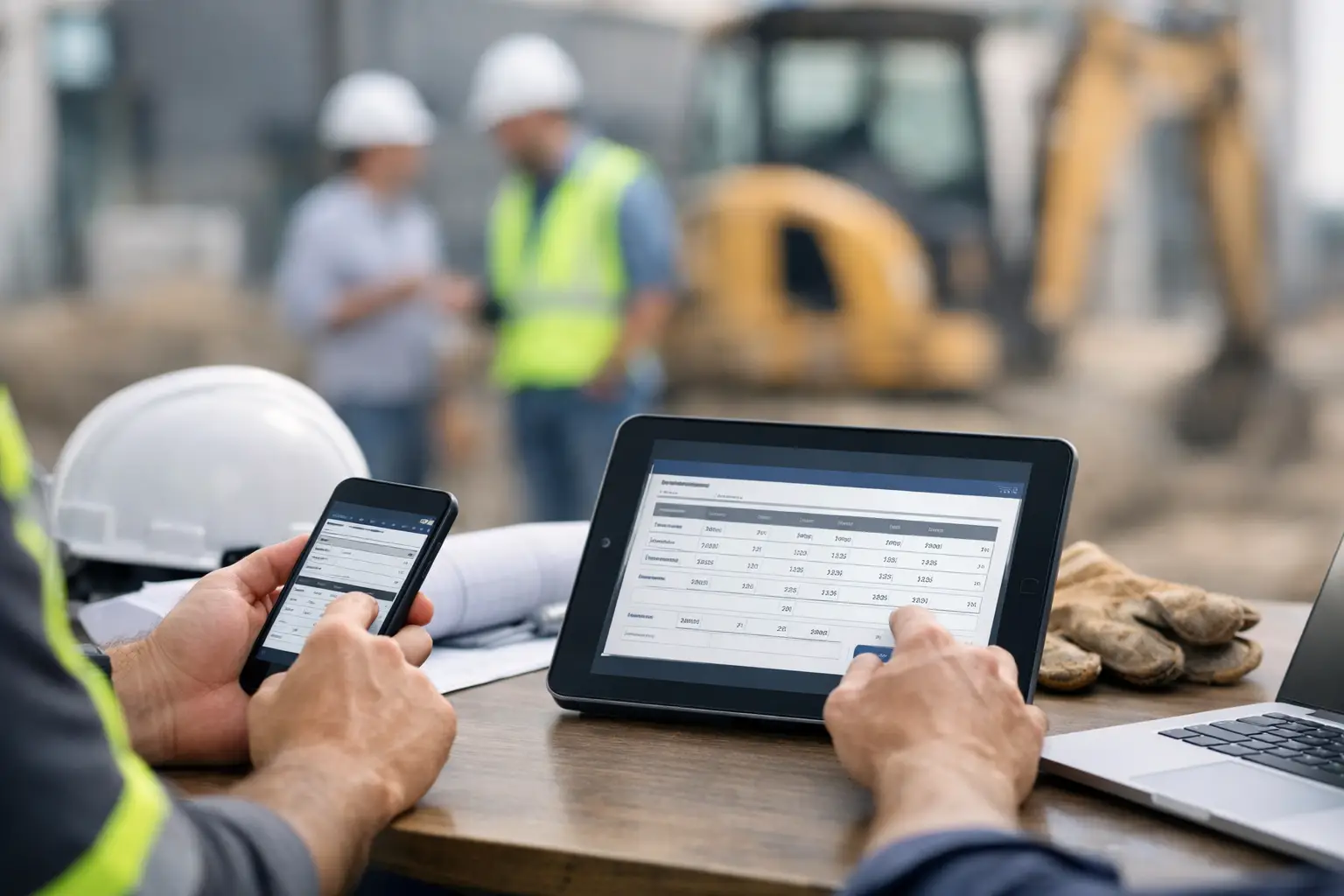
The best daily logs are completed at the source: on a phone or tablet at the jobsite. Waiting until Friday to reconstruct the week from memory creates gaps. People forget exact crew counts, arrival times, material quantities, and the reason work stopped. A log entered before the crew leaves is more accurate and much more useful.
Daily logs protect your position when problems show up
Most subcontractors do not start the day expecting a dispute. But construction jobs change. Schedules slip. Site conditions differ from the plans. Other trades create conflicts. A customer may ask why a task took longer than expected.
When that happens, a daily log gives you a dated record instead of a vague explanation. It can show that your crew was on site, ready to work, but access was blocked. It can document rain, wind, unsafe conditions, failed inspections, missing materials, or a direction from the GC that changed the plan.
Photos make the record stronger. A quick photo of standing water, unfinished prep work, blocked access, or damaged materials provides context that a short note cannot. Include a plain description of what the photo shows and when it was taken. The goal is not to build a case every day. The goal is to preserve the facts before they are forgotten.
This matters for change orders, back charges, schedule conversations, and payment disputes. A daily log will not solve every disagreement by itself. Contract terms, notice requirements, and written approvals still matter. But a consistent record gives your business a much better starting point than scattered texts and memory.
Track labor before payroll becomes a guessing game
Labor is usually the biggest cost on a subcontractor job. If you do not know where crew hours went each day, you cannot see whether a job is making money until the damage is already done.
Daily logs connect the work performed to the people who performed it. A masonry contractor, for example, can record that a six-person crew completed a specific wall section, spent time moving materials, and lost an hour due to another trade occupying the work area. That is far more useful than seeing only a total of 48 payroll hours at the end of the week.
Over time, this information helps you spot patterns. Maybe a project needs more labor than estimated because material staging is poor. Maybe one crew consistently completes a type of work faster because they have the right equipment on site. Maybe travel time, rework, or waiting time is quietly draining margin.
There is a balance to strike. Do not turn daily logs into a complicated production report that field teams avoid. Track the information your office will actually use: crew members or headcount, hours, work completed, location or cost code, and major issues. If a field process is too hard, it will not get done consistently.
Keep materials and equipment from becoming invisible costs
Material and equipment issues often show up as surprises because they are tracked in too many places. A foreman may know that a delivery was short. The office may not hear about it until an invoice arrives or the crew returns to the same job unexpectedly.
A daily log creates a place to record deliveries, quantities used, missing items, damaged material, and equipment activity. For a landscaping crew, that may mean noting plants delivered, mulch installed, and a skid steer that was down for repair. For an electrical contractor, it may mean recording a panel delivery that did not arrive and the work that could not proceed.
These notes help the office follow up quickly instead of discovering the problem after the schedule has moved. They also make it easier to compare actual job costs against the estimate. If a project is burning through material or equipment time faster than planned, you need to know while there is still time to act.
Better communication without more phone calls
A foreman should not have to call the office three times each day to explain what happened. An owner should not need to wait for a weekly meeting to learn that a key job is falling behind. Daily logs give both sides a shared record.
For the field, the log is a fast way to report progress and flag problems. For the office, it is a daily window into labor, activity, photos, and job conditions. That reduces the usual scramble for information when a customer calls, an invoice needs support, or payroll is being reviewed.
This is especially useful when crews are spread across several jobsites. A small subcontractor can outgrow whiteboards, text threads, and paper timecards quickly. The issue is not that those tools never work. The issue is that they do not create one reliable job record everyone can find.
A field-friendly platform such as SimplySub can bring daily logs, crew time, job photos, materials, and job documentation into the same place. That means less double entry for the office and fewer separate apps for the crew. The process still needs to be simple enough for people to use on a busy jobsite.
What a useful daily log should include
The right format depends on your trade and the type of work you perform. A roofing crew may need weather details and roof areas completed. A plumbing crew may need unit numbers, rough-in progress, inspections, and fixture deliveries. But most subcontractors benefit from recording the same core facts:
- Date, project, and specific work location
- Crew members, labor hours, and subcontract labor on site
- Work completed, including quantities or areas when useful
- Materials delivered, used, missing, or damaged
- Equipment used, idle time, breakdowns, or rentals
- Weather, access problems, safety concerns, inspections, and delays
- Photos and notes tied to change conditions or jobsite issues
Keep descriptions factual. Write “crew waited from 8:00 a.m. to 11:30 a.m. because the work area was occupied” rather than “GC caused major problems.” Facts hold up better, reduce unnecessary friction, and give management a clearer picture of the job.
Build the habit without slowing down the field
The hardest part is not choosing what to track. It is making daily logs part of the normal closeout routine. Assign responsibility to the foreman or crew lead, set a clear deadline, and make the form short enough to finish before leaving the site.
Start with a few required fields. Crew hours, work completed, delays, and photos are usually the best place to begin. After the habit is established, add trade-specific details that help with estimating, billing, or production tracking.
Review logs regularly. If nobody in the office looks at them, field teams will see them as busywork. When a log leads to a quick material follow-up, supports a change request, or catches a labor problem early, tell the crew. That shows the record has a purpose.
Daily logs are not about watching people more closely. They are about giving your business a reliable record of the work it performs and the conditions it works under. Make the process fast, review what matters, and let each completed log protect tomorrow's decisions. To see how SimplySub can make daily reporting easier, schedule a demo or review pricing.