Missed clock-ins, vague daily reports, and the classic “we thought the other crew handled it” problem can turn a profitable job into a cleanup job fast. A solid construction crew accountability guide helps subcontractors stop those small misses before they become payroll disputes, callbacks, schedule slips, or margin loss.
Accountability on a jobsite is not about breathing down people’s necks. It is about making expectations clear, tracking what actually happened, and giving foremen, crews, and office staff the same version of the truth. When accountability is weak, the office blames the field, the field blames bad information, and nobody can pin down labor, materials, or job progress with confidence.
What crew accountability really means
For subcontractors, accountability means every crew member knows four things: what they are supposed to do, where they are supposed to do it, when it needs to happen, and how that work gets documented. If any one of those is fuzzy, problems start multiplying.
That does not mean every trade needs the same level of tracking. A concrete crew pouring one slab has different reporting needs than a service plumbing team bouncing between calls. The goal is not maximum paperwork. The goal is useful visibility. Good accountability should make work easier to manage, not harder to finish.
Why accountability breaks down on real jobsites
Most accountability issues are not caused by bad employees. They are caused by bad systems. If time is tracked on paper cards, job notes live in text threads, and photos sit on one superintendent’s phone, your process is already creating gaps.
Crews also lose trust in accountability systems when the rules change from job to job. If one foreman wants photos every day, another only wants updates when something goes wrong, and payroll needs timecards in a different format every week, people stop taking the process seriously. Consistency matters more than complexity.
Another common issue is delayed reporting. If the office learns on Friday that a crew was short-handed on Tuesday, there is not much anyone can do with that information. Accountability works best when it happens close to the work, not days later.
The construction crew accountability guide every subcontractor can use
The fastest way to improve crew accountability is to tighten a few core habits across every job. Start with labor, then production, then documentation. If you try to fix everything at once, the system usually falls apart in the field.
Set one standard for time and attendance
If labor is your biggest cost, it needs the clearest process. Every employee should clock in and out the same way, with the job and cost code tied to that time. Foremen should review hours daily, not at the end of the week when memory is already fuzzy.
This is where many subcontractors get stuck. They know time tracking matters, but they keep relying on paper cards, phone calls, or spreadsheet updates after the fact. That creates disputes and leaves owners guessing which job actually used the labor.
The better approach is simple: crews log time from the field, foremen verify it the same day, and the office can see labor hours by job without chasing anyone down. Simple to learn beats detailed but ignored every time.
Make daily reporting short enough to actually get done
A daily log should answer basic questions: Who was on site? What got done? What slowed the crew down? Were materials delivered? Were there issues, changes, or safety events? If your form takes twenty minutes to fill out, it will be skipped or rushed.
Short, repeatable reporting is what creates accountability. A masonry foreman does not need to write a novel. He needs to record crew count, wall sections completed, material shortages, weather delays, and a few job photos. That is enough to protect the company and keep production visible.
Tie accountability to production, not just presence
A crew can be on time and still miss the mark. Accountability is not only about showing up. It is also about whether the planned work was completed with the labor and equipment assigned.
This is where job expectations need to be realistic. If a framing crew loses half a day waiting on a lift, that is not a performance issue in the same way as poor production with everything ready to go. Good accountability separates controllable misses from jobsite obstacles. Without that distinction, crews feel blamed for problems they did not create.
Use photos as proof, not decoration
Job photos are one of the easiest accountability tools on a construction site, but only if they are organized. Random pictures in a phone gallery do not help much six weeks later during a billing dispute.
Photos should be tied to the right job and date, and they should support what the crew says was completed. For trades like roofing, fencing, landscaping, concrete, and underground work, photos can confirm progress, site conditions, delivered materials, and completed sections before they get covered up.
Give foremen ownership without burying them in admin
Foremen are usually the hinge point for accountability. If they do not buy into the process, the office gets partial information and the crew follows mixed signals. But many foremen push back for a reason - too many systems are built like office software and dumped on field leaders who already have enough to manage.
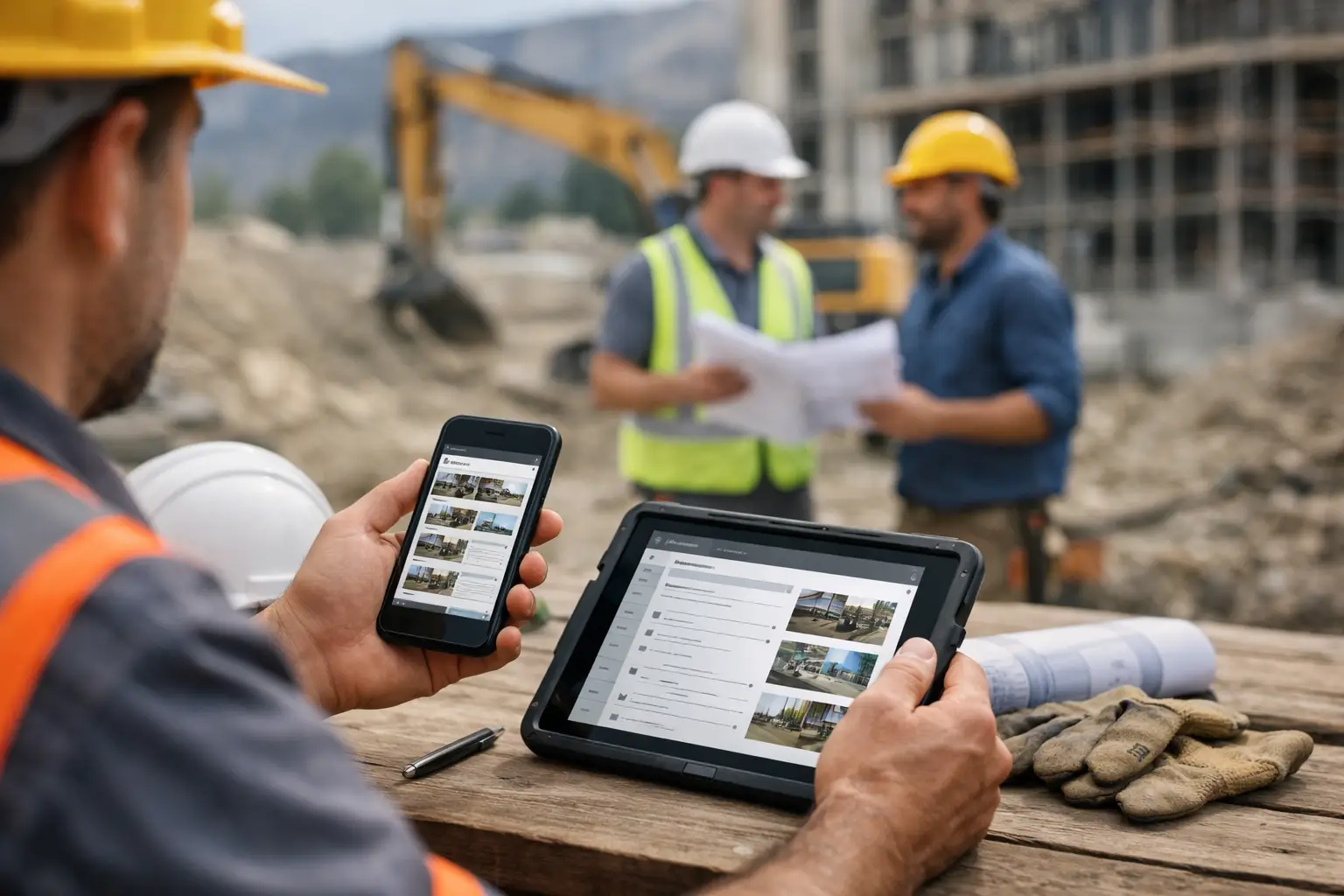
The process has to respect the pace of the workday. If a foreman can handle time, notes, and photos from one mobile workflow in a couple of minutes, accountability improves. If he has to bounce between apps, text the office, and re-enter the same information later, it will break.
What to measure in a crew accountability system
A good construction crew accountability guide tracks a small group of numbers consistently. Labor hours by job is first. Then compare planned crew size to actual crew size, and planned work completed versus actual progress. Add missed punches, late starts, rework incidents, and unresolved field issues.
Not every metric belongs on every dashboard. A five-crew subcontractor does not need enterprise reporting. What they do need is a clear read on whether jobs are staying on track, whether payroll is clean, and whether documentation exists when problems come up.
The trade-off is straightforward. More detail can help, but too much reporting creates fake compliance. People fill in boxes without improving performance. Start with the measurements that affect profit and payroll first.
How to roll this out without crew pushback
The biggest mistake is presenting accountability like punishment. If the message is “we need to watch everyone closer,” expect resistance. If the message is “we need cleaner hours, better job records, and fewer end-of-week headaches,” the field is far more likely to cooperate.
Explain what is changing and why. Keep the rules the same across jobs. Show crews how better records protect them from bad payroll, finger-pointing, and confusion over who did what. Most field teams are fine with accountability when the process is fair and fast.
It also helps to roll out one layer at a time. Start with time tracking and job assignment. Then add daily logs and photos. Then tighten production tracking. A phased rollout sticks better than a full system dump on a Monday morning.
Technology helps, but only if the field will use it
Software does not create accountability by itself. It only makes a good process easier to follow. The right system should be built for real jobsites, which means mobile-friendly, fast to adopt, and clear enough that a crew can use it without a training week.
For subcontractors, this matters more than fancy features. If your team avoids the system, the office ends up back in spreadsheets and text chains anyway. That is why many contractors choose tools built around daily field use instead of bloated platforms designed for general contractors. A system like SimplySub fits that need because it keeps crew tracking, daily logs, photos, and job records in one place without adding extra admin.
Accountability should reduce friction, not add it
The best accountability systems feel almost boring. Hours are accurate. Job notes are there when you need them. Photos are easy to find. Foremen know what to report. Owners can see what happened without making ten calls.
That kind of consistency does more than clean up paperwork. It protects margins, speeds up billing, cuts down on disputes, and gives subcontractors better control across every active job. If your current process depends on memory, paper, and chasing updates at the end of the day, that is your sign to tighten it up.
Start with the basics, make them repeatable, and keep the system simple enough that the field actually uses it. Accountability works best when it becomes part of the day, not a separate job after the real work is done. To learn more, schedule a demo or review pricing and start your 100 day risk free account.